
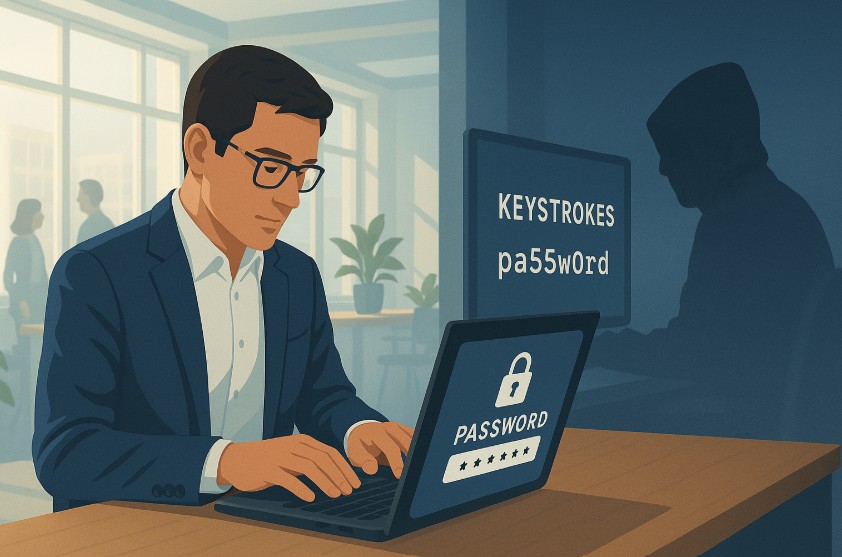
Have you ever considered how easily an attacker could gain access to your most private information without even breaching your firewall? In the vast landscape of cyber threats, keyloggers remain one of the most insidious tools.
Unlike ransomware or viruses that announce their presence, a keylogger operates silently, watching every keystroke and recording sensitive information. From bank details to confidential business data, these tools can dismantle a person’s privacy or compromise an entire organisation without the victim realising what is happening.
To understand the seriousness of this threat, it is important to examine what keyloggers are, how they operate, the damage they cause, and the strategies that can help detect and prevent them.
What is a Keylogger in Cyber Security?

A keylogger, also known as a keystroke logger, is either a piece of software or a physical device designed to record everything a user types on a keyboard. In cyber security, this makes them a critical threat because they target the most vulnerable part of any security system, the human user.
While some organisations deploy keyloggers for legitimate monitoring, such as tracking productivity or compliance, malicious keyloggers are installed covertly by attackers to steal information. Once installed, these tools can bypass many traditional defences by recording data at its source, long before encryption or secure channels can protect it.
How Does a Keylogger Work?
The working principle of a keylogger is deceptively simple. It sits between the keyboard and the operating system, capturing keystrokes before they are displayed on the screen. The recorded information is then stored locally or transmitted to a remote server controlled by the attacker.
Hardware Keyloggers
Hardware-based keyloggers must be physically connected to the target device. They can appear as USB adaptors, modified keyboards, or even small circuit boards placed inside the computer.
These devices capture keystrokes directly from the keyboard hardware, making them difficult to detect through conventional security tools. Some modern versions allow attackers to download the captured data wirelessly, eliminating the need for physical retrieval.
Software Keyloggers
Software-based keyloggers are more common and are usually installed through malicious downloads, phishing campaigns, or trojans disguised as legitimate applications.
They employ several techniques:
- System hooks intercept signals from the keyboard.
- Memory injection records keystrokes as they are processed.
- DLL injections or filter drivers capture data flowing between the keyboard and the system.
For example, a user might unknowingly download a seemingly harmless “document viewer” from an untrusted website. Hidden inside the program is a software keylogger that records every keystroke and quietly sends it back to the attacker.
Why Are Keyloggers Considered Dangerous?

The danger of keyloggers lies not only in their ability to capture data but also in their invisibility. Unlike other forms of malware that slow systems down or display obvious warning signs, many keyloggers operate seamlessly in the background.
They pose risks in several areas:
- Data theft is the most immediate threat. Keyloggers record login credentials, social security numbers, credit card details, and personal communications.
- Financial fraud follows quickly, as attackers use stolen information to transfer money or make unauthorised purchases.
- Identity theft is another severe consequence. Attackers can use a single compromised account to piece together an individual’s identity, leading to long-term exploitation.
- Corporate espionage occurs when businesses are targeted. Intellectual property, trade secrets, and sensitive negotiations may be exposed, damaging competitiveness and reputation.
In 2023, a European design firm fell victim to a software keylogger embedded in an email attachment. The attackers captured login credentials to the company’s cloud storage, leading to the theft of proprietary product designs. The financial impact was not just immediate but extended to lost contracts and diminished trust.
What Are the Different Types of Keyloggers?
Keyloggers fall broadly into two categories, hardware and software. Each functions differently but with the same ultimate goal of capturing keystrokes.
Software Keyloggers
These are widely distributed through phishing emails, malicious websites, or bundled inside trojans. Once installed, they monitor keystroke activity and send logs to attackers. Advanced software keyloggers extend their functionality to capture screenshots, monitor browsing history, or even record microphone input.
Hardware Keyloggers
Hardware loggers are inserted physically, often resembling USB drives or keyboard connectors. In some cases, they may even be integrated within the keyboard itself. They store data locally, which the attacker later retrieves, though advanced models may use wireless communication to transmit logs.
How Are Keyloggers Built and Deployed?

The construction of keyloggers reveals the ingenuity of attackers. Some criminals use video surveillance by recording a keyboard and screen simultaneously to deduce keystrokes. Others embed hardware bugs inside keyboards, making them virtually invisible to the untrained eye.
Software-based keyloggers are created using different programming techniques. Some use system hooks written in C, others rely on cyclical requests coded in Visual Basic or Delphi. Rootkit-enabled keyloggers are particularly dangerous, as they can disguise themselves to avoid detection by even advanced antivirus software.
How Do Keyloggers Infect Devices?
Keyloggers reach target devices in a variety of ways, each designed to exploit human error or system weaknesses.
- Spear phishing remains one of the most common techniques, where attackers trick victims into downloading malware through convincing emails.
- Drive-by downloads happen when a user visits a compromised website that silently installs malware.
- Trojan horses masquerade as useful applications but install keyloggers once opened.
- Physical access enables insiders to attach hardware devices without the user’s knowledge.
For example, in one case, attackers embedded a keylogger inside a trojan disguised as an update for a widely used design tool. Employees at a small agency downloaded the update, unknowingly handing over sensitive project files to criminals.
What Problems Can Keyloggers Cause on Devices?
Beyond stealing information, keyloggers also affect system performance. On desktops and laptops, users may notice unexplained delays when typing, frequent application freezes, or unusual background processes consuming computing resources.
Mobile devices are also vulnerable. Software keyloggers on smartphones can record touch inputs, track browsing behaviour, and in some cases capture screenshots or intercept camera and microphone feeds. This allows attackers to build a complete profile of the victim’s activities.
How Can You Detect a Keylogger?

Detecting a keylogger is challenging but not impossible. A practical first step is to inspect the task manager for unusual processes running in the background.
Another is to review the startup list to check for programs configured to launch automatically. Network monitoring tools can reveal unexplained data usage, which may indicate logs being sent to an attacker’s server.
Browser extensions are another overlooked vector. A suspicious extension that was never intentionally installed might in fact be a disguised keylogger. Careful inspection and removal of unfamiliar add-ons can help reduce risks.
How Can You Protect Against Keyloggers?
Defending against keyloggers requires a combination of security tools and good user practices. Regularly updating systems ensures vulnerabilities are patched before attackers can exploit them.
Antivirus programs and dedicated anti-keylogger software provide an additional layer of defence. Multi-factor authentication (MFA) reduces the value of stolen passwords since attackers cannot access accounts without the secondary verification step.
A password manager is another effective measure. By auto-filling passwords, it reduces the number of keystrokes typed, denying keyloggers the data they seek. For highly sensitive activities, using a virtual keyboard can further limit exposure.
Comparing Defence Strategies:
| Strategy | Benefit |
| Antivirus/Anti-keylogger software | Detects and blocks malicious programs |
| Regular updates | Patches vulnerabilities exploited by malware |
| Multi-factor authentication | Adds extra security beyond passwords |
| Password managers | Reduces keystroke entry and password reuse |
| Virtual keyboards | Bypasses traditional keystroke recording |
What Is the Impact of Keyloggers on Privacy and Security?
Keyloggers represent a dual threat to both personal and organisational security. For individuals, the consequences may include drained bank accounts, compromised identities, and a loss of privacy.
For businesses, the stakes are even higher, with potential regulatory penalties under data protection laws, loss of client confidence, and exposure of strategic assets.
The increasing sophistication of keyloggers also means they are likely to remain a persistent challenge in the global threat landscape. Their ability to bypass technical safeguards by targeting human behaviour makes them a tool of choice for cybercriminals and spies alike.
Conclusion
A keylogger in cyber security exemplifies the evolving nature of cybercrime. Unlike attacks that rely on brute force or large-scale vulnerabilities, keyloggers exploit something more fundamental human input.
Whether deployed through malicious software or hidden hardware, they have the potential to compromise personal privacy, cause financial damage, and destabilise businesses.
Awareness remains the most effective shield. By understanding how keyloggers function, the risks they pose, and the methods available to detect and prevent them, individuals and organisations can strengthen their defences. In an era where every keystroke matters, vigilance is the best form of protection.
FAQs
Can antivirus software block all keyloggers?
Not necessarily. While antivirus programs detect many known threats, advanced or rootkit-based keyloggers may still evade detection, making specialised tools necessary.
Do keyloggers target mobile devices as well as computers?
Yes. Software keyloggers can infect smartphones and tablets, capturing taps, swipes, and even screen content.
How can delays while typing indicate a keylogger?
Since keyloggers intercept signals before they reach the operating system, a noticeable lag while typing can sometimes point to their presence.
Can hardware keyloggers be used with modern devices?
Yes. Some keyloggers are compatible with wireless keyboards or embedded directly into hardware, making them difficult to spot.
Which industries face the highest risk from keyloggers?
Financial institutions, healthcare organisations, and government agencies are frequent targets due to the sensitive nature of their data.
How does a password manager help against keyloggers?
By autofilling login credentials, password managers reduce keystroke input, limiting what keyloggers can capture.
What steps should a business take after discovering a keylogger?
Systems should be isolated immediately, passwords reset, and a thorough forensic analysis conducted to ensure no additional compromise exists.