
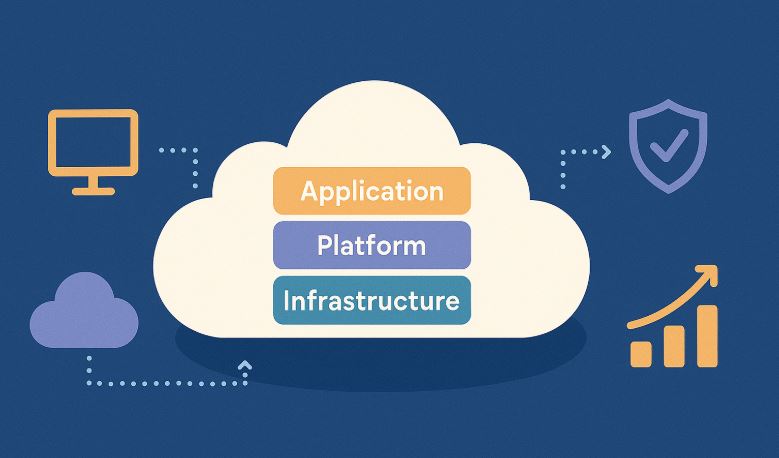
In today’s hyper-connected world, cloud computing powers nearly every digital service, from the applications we use daily on our smartphones to the complex systems that run global businesses.
Whether you’re watching a film on a streaming platform, collaborating on a document with colleagues across continents, or storing your photos online, you’re relying on the cloud.
But as seamless as these experiences seem, the technology behind them is incredibly complex. That’s where cloud computing frameworks come in, structured models that simplify how cloud services are organised, delivered, and understood.
Among these frameworks, the Cloud Reference Model (CRM) stands out as a crucial tool. It brings clarity to the intricate world of cloud services, helping providers and users alike make sense of the relationships, responsibilities, and technologies that support modern cloud environments.
What Is the Cloud Reference Model?
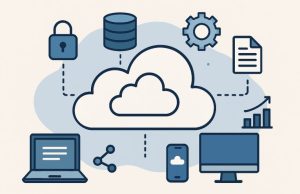
The Cloud Reference Model is a conceptual framework that outlines the components, layers, and interactions within cloud computing systems. It provides a unified structure that helps stakeholders, cloud providers, consumers, developers, and auditors understand how cloud services are designed and how they function together.
At its core, the CRM divides cloud computing into logical tiers, including Infrastructure as a Service (IaaS), Platform as a Service (PaaS), and Software as a Service (SaaS). Some extended versions also include a Cloud Management Layer to account for governance, orchestration, and monitoring.
This layered architecture not only simplifies understanding but also supports strategic planning, development, deployment, and management of cloud services.
Why Does It Matter?
For one, cloud environments are becoming increasingly diverse and decentralised. Organisations use services from multiple providers, deploy across public and private clouds, and must meet various compliance standards. The CRM helps bring order to this complexity by clearly defining the roles, boundaries, and responsibilities across the ecosystem.
Furthermore, it empowers users, technical and non-technical alike, to evaluate cloud solutions confidently, align them with their business goals, and implement them securely and efficiently.
In essence, the Cloud Reference Model acts as a map of the cloud landscape, essential for navigating today’s digital infrastructure with clarity and control.
How Does the Cloud Reference Model Define Cloud Computing Layers?
At its core, the Cloud Reference Model divides cloud computing into three major service models:
- Infrastructure as a Service (IaaS)
- Platform as a Service (PaaS)
- Software as a Service (SaaS)
These layers form the foundation of cloud services, enabling a tiered architecture that businesses and users can interact with depending on their needs. The CRM also includes the Cloud Management Layer, which ensures secure and efficient management of these services.
What Is Infrastructure as a Service (IaaS) in Cloud Computing?
IaaS is the foundation layer of the cloud computing model. It offers essential computing resources such as servers, networking, and storage on demand.
Users of IaaS can build and manage their virtual machines without purchasing physical hardware. This model is highly flexible and is typically used by IT departments, software developers, and businesses looking for scalable infrastructure.
Common features of IaaS include:
| Feature | Description |
| Compute Power | Virtual machines with custom configurations for CPU, RAM, and disk space |
| Networking | Tools for load balancing, IP management, and firewalls |
| Storage | Object-based, block, or file storage with scaling options |
| Operating Systems | Access to a variety of OS environments for app deployment |
| Security Controls | Identity management, encryption, and compliance tools |
IaaS allows businesses to scale their infrastructure as needed, only paying for the resources they use, making it a cost-effective solution for growing companies.
What Is Platform as a Service (PaaS) and How Is It Used?
PaaS is the middle layer, offering an environment for developing, testing, and deploying applications. Developers can use tools and frameworks provided by the platform without having to manage underlying infrastructure.
Unlike IaaS, which offers control over operating systems and hardware, PaaS abstracts these details and provides an easy-to-use environment for software development.
Core components of PaaS include:
| Component | Description |
| Development Tools | Integrated tools and libraries for building applications |
| Database Services | Managed databases for storing and querying application data |
| Middleware | Software that connects applications and supports communication |
| Deployment Automation | Continuous integration and deployment (CI/CD) tools |
| Monitoring | Performance and usage analytics |
PaaS is especially popular among software companies that want to focus on coding without worrying about infrastructure management.
What Is Software as a Service (SaaS) in the Cloud Model?
SaaS is the topmost layer and the most commonly encountered by end-users. It delivers fully developed software over the internet, usually through a web browser.
Unlike IaaS and PaaS, SaaS requires no installation, maintenance, or infrastructure management by the user.
Examples include: Google Workspace, Microsoft 365, Dropbox, Salesforce
| Feature | Description |
| Web Access | Users access applications via a browser |
| Hosted & Maintained | Service providers handle updates, patches, and server management |
| Subscription-Based Pricing | Pay-as-you-go models for cost efficiency |
| Collaboration Tools | Shared documents, real-time messaging, and scheduling |
| Multi-device Accessibility | Seamless use across desktops, tablets, and smartphones |
SaaS makes it easy for users to get started quickly, collaborate efficiently, and scale usage without added IT burden.
How Do Cloud Deployment Models Fit into the Reference Model?
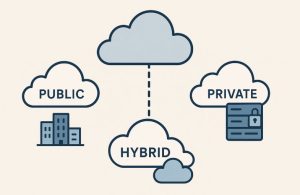
The Cloud Reference Model doesn’t stop at service layers. It also defines various deployment models that describe how and where cloud services are hosted. According to the NIST framework, there are four main deployment models:
| Deployment Model | Description |
| Public Cloud | Cloud services offered to the public over the internet, managed by providers like AWS, Azure, Google Cloud |
| Private Cloud | Exclusive to one organisation, either on-premises or hosted by a third party |
| Hybrid Cloud | A combination of public and private clouds, allowing data and applications to move between them |
| Community Cloud | Shared by organisations with similar goals or compliance needs |
Each model is designed to accommodate different business needs. For example, public clouds are ideal for scalability and cost efficiency, while private clouds are better suited for highly regulated industries such as finance and healthcare.
What Role Does Virtualisation Play in the Cloud Reference Model?
Virtualisation is the technological enabler of the cloud. It allows multiple virtual systems to run on a single physical machine, which increases resource utilisation, efficiency, and scalability.
Virtual machines (VMs) and containers like Docker and Kubernetes are used to run isolated services. This abstraction is what makes IaaS and PaaS scalable and flexible. Without virtualisation, it would be impossible to achieve the agility, elasticity, and cost-effectiveness that cloud computing offers.
How Do Standards Like NIST and CSA Shape the Cloud Reference Model?
What Is the NIST Cloud Computing Reference Architecture?
The National Institute of Standards and Technology (NIST) offers one of the most referenced cloud computing models. It provides clarity through its five-actor architecture:
| Actor | Role |
| Cloud Consumer | Uses cloud services |
| Cloud Provider | Offers cloud resources and platforms |
| Cloud Carrier | Facilitates connectivity between providers and consumers |
| Cloud Auditor | Assesses performance, compliance, and security |
| Cloud Broker | Manages service integration and acts as an intermediary |
This model is used worldwide to ensure vendor-neutral, interoperable, and secure cloud environments.
What Does the CSA Cloud Reference Model Focus On?
The Cloud Security Alliance (CSA) developed its own reference model focusing on security and governance. It includes roles, layers, and interactions between consumers and providers while outlining risks and security protocols.
The CSA model is modular and adaptable, addressing:
-
- Identity and access management
- Data protection
- Encryption
- Security compliance and audits
It is especially useful for enterprises that prioritise data governance and risk mitigation.
How Are Other Models Like OCCI and Industry Frameworks Relevant?
What Is the OCCI Cloud Reference Model and Why Is It Important?
The Open Cloud Computing Interface (OCCI) model offers a standard for managing and provisioning cloud services. It ensures compatibility between cloud providers and helps integrate multiple services into one system.
Key areas of focus include:
- Standardised APIs for cloud control
- Cross-provider resource management
- Interoperability across platforms
OCCI is widely supported by cloud providers who aim for global compatibility and open standards.
What Are Some Proprietary Cloud Reference Models Used by Enterprises?
Many large tech companies also have their own internal reference models, including:
- IBM Cloud Architecture
- Oracle Cloud Framework
- HP and Cisco Reference Models
While proprietary, these frameworks often align with international standards and are tailored for enterprise-level services.
What Security Measures Are Included in Cloud Reference Models?
Cybersecurity is a top concern for cloud users, and reference models address it in detail. The NIST Cloud Security Reference Architecture (SP 500-292) offers a framework that integrates with existing cloud models.
Security responsibilities are typically shared between the cloud provider and the consumer, depending on the service model:
| Security Area | IaaS | PaaS | SaaS |
| Physical Security | Provider | Provider | Provider |
| Network Controls | Provider & Consumer | Provider | Provider |
| Data Encryption | Consumer | Shared | Provider |
| Application Security | Consumer | Shared | Provider |
| Compliance & Auditing | Shared | Shared | Provider |
Reference models recommend using a risk-based approach to identify which security measures should be implemented and who is accountable.
How Does the Cloud Reference Model Support Modern Business Needs?
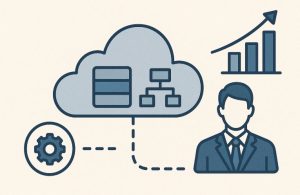
Organisations today face several cloud-related challenges: managing cost, ensuring security, maintaining compliance, and integrating diverse systems. The CRM helps by providing a clear structure and standardisation.
It enables:
- Strategic decision-making: Clarifies what services and deployment models suit business needs
- Operational efficiency: Supports automation, scalability, and resource optimisation
- Security and compliance: Aligns with global standards and risk management
- Vendor neutrality: Reduces lock-in and supports hybrid/multi-cloud approaches
The CRM is more than just a planning tool, it’s a blueprint for business innovation.
Conclusion: Why the Cloud Reference Model Is Essential in Today’s IT Landscape?
The Cloud Reference Model has evolved into a critical framework for designing, managing, and scaling cloud computing environments. Whether it’s through the NIST model’s five actors or CSA’s modular approach to security, the CRM offers a systematic way to understand and implement cloud services.
For consumers, it provides clarity and confidence when choosing cloud solutions. For providers, it offers a roadmap to ensure scalability, security, and interoperability. In a global digital ecosystem that’s growing more complex by the day, having a standardised reference model is not just helpful, it’s essential.
Frequently Asked Questions
What is the main purpose of a cloud reference model?
It defines the layers, components, and roles in cloud environments to help standardise and guide implementation.
What are the core components of the NIST cloud reference model?
The NIST model includes three service layers (IaaS, PaaS, SaaS), four deployment models (public, private, hybrid, community), and five actors (consumer, provider, carrier, auditor, broker).
How do PaaS and IaaS differ?
IaaS provides virtual infrastructure like servers and networks, while PaaS offers a development environment for building and deploying applications.
Is the CRM only for large organisations?
No. It’s useful for any organisation or individual trying to understand or implement cloud services efficiently.
How does CRM improve cloud security?
It defines responsibilities clearly between users and providers and aligns with best practices in security and compliance.
Can the CRM help with hybrid or multi-cloud strategies?
Yes. It supports planning and integration across different cloud providers and deployment models.
Which industries benefit most from using the cloud reference model?
Almost all, especially sectors, like finance, healthcare, education, and retail that require secure, scalable, and efficient IT environments.